15 Named Laws That Will Make You See the World Differently – Guaranteed
You’ve probably heard of the Dilbert Principle, or made an observation that you were sure there’s a name for. You’re not alone: somewhere along the way, ordinary people — engineers, writers, internet commenters, even a cartoonist — made an observation so sharp, so annoyingly accurate, that it got turned into a “law.” Somehow, these so-called named laws — named after the people who first pointed them out — have quietly become some of the sharpest, funniest, and most useful ways to describe how the world actually works. Here are 15 of the best, including the ridiculously named Newton’s Flaming Laser Sword and the devastatingly accurate Dilbert Principle.
Note: Featured image credit: “Statue of Justice” by pexels.com/Selim Karadayı
1. Andy and Bill’s Law


Andy and Bill’s Law is named after Andy Grove (ex-CEO of Intel) and Bill Gates, who was CEO of Microsoft at the time. This named law states that when a computer chip is released, new software will be released to use up all of its power.
2. Benford’s Law of Controversy

This is one of those named laws to keep handy in your back pocket. It states that passion is inversely proportional to the amount of real information available. So, the less information is available, the more passionate people will be about the subject. Sounds about right – pull this one out at the dinner table when having an argument with family.
3. Crane’s Law

.jpg)
“There is no such thing as a free lunch” according to Crane’s law, a popular adage reminding that it’s impossible to get something for nothing. The phrase was popularized by Robert A. Heinlein’s 1966 sci-fi novel The Moon is a Harsh Mistress, and by economist Milton Friedman’s 1975 book There’s No Such Thing as a Free Lunch.
4. Dilbert Principle
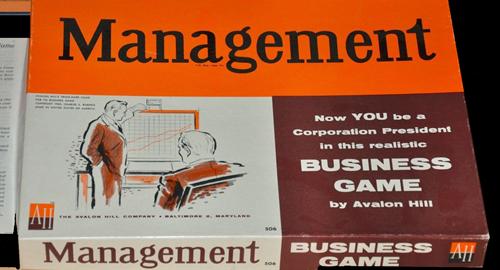

One of the more famous named laws, the Dilbert Principle is a concept developed by Scott Adams, creator of the Dilbert comic strip series. It posits that the most ineffective workers get moved to the place where they can do the least damage: management. According to the character Dogbert in the February 5, 1995 comic strip, “leadership is nature’s way of removing morons from the productive flow.”
5. Finagle’s Law


According to Finagle’s Law: Anything that can go wrong will… at the worst possible moment. It’s also known as Melody’s Law, Sod’s Law or Finagle’s corollary to Murphy’s Law. It gets a mention in a 1967 Star Trek episode.
6. Gell-Mann Amnesia EffecT


The Gell-Mann Amnesia Effect boils down to this: believing newspaper articles about topics outside one’s area of expertise, even after having read other articles in the same newspaper about your areas of expertise and knowing that they are wrong. It was first named by Michael Crichton (author of Jurassic Park) in 2002, naming it after physicist Murray Gell-Mann.
7. Humphrey’s Law


Have you ever had that experience where you’re working on something really fast – as if on auto-pilot – then suddenly your brain kicks in, you start focusing on what you’re doing, and suddenly you start making mistakes? That’s Humphrey’s Law, which states that conscious attention to a task that is usually performed automatically can impair performance.
8. Jevons Paradox


Raise your hands if you’re guilty of this one: Jevons Paradox states that when the cost of something goes down, that doesn’t reduce the spend on that thing, it leads to more consumption. If your favorite food was $2.50 a piece and you spent $10 a week on buying four, do you still buy four when it goes down to $2.00? Or do you buy five and still spend that full $10?
9. Lewis’s Law
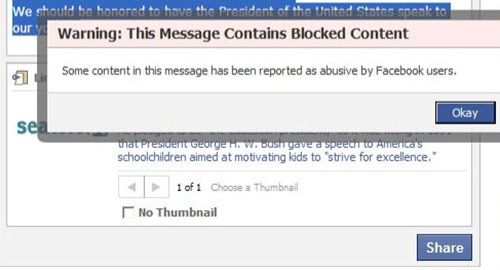

Named after English journalist Helen Lewis, this law states that the comments on any article about feminism justify feminism. Just head to your social medium of choice and you’ll see what she means.
10. Muphry’s Law
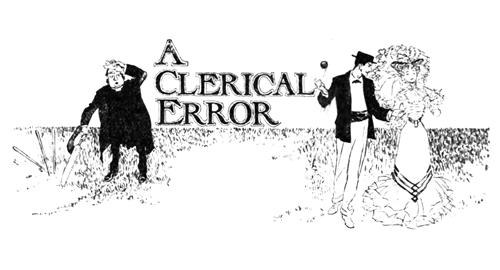

No, that is not a typo, and this is one of those named laws that we’ve all fallen victim to at some point in our lives. Muphry’s Law states that if you write something that criticizes editing or proofreading, there will be a mistake of some kind in what you have written.
11. Newton’s Flaming Laser Sword

Also known as Alder’s Razor, this is a philosophical razor posited by mathematician Mike Alder in a 2004 issue of Philosophy Now: what can’t be settled with an experiment isn’t worth debating. Simple and straightforward, thank you!
12. Parkinson’s Law


Another one related to the workplace, Parkinson’s Law states that work will expand to fill the time available for it to be completed. The law was first published in The Economist in 1955 by historian C. Northcote Parkinson – his satirical essay also notes that the number of workers within public administration tends to grow, regardless of the workload.
13. Shirky Principle


Conspiracy theorists, this named law is for you. According to the Shirky Principle, institutions that create the solution to a problem will try to preserve that problem. It is attributed to Clay Shirky, a writer and consultant.
14. Stigler’s Law of Eponymy


Stigler’s Law of Eponymy was proposed by statistics professor Stephen Sigler in 1980 and states that no scientific discovery is named after its original discover. For example Hubble’s Law was actually derived by George Lemaître two years before Edwin Hubble, and Halley’s Comet, which was seen by astronomers since at least 240 BC.
15. Vierordt’s Law


In retrospect, “short” periods of time tend to be overestimated, and “long” periods of time tend to be underestimated, according to Vierordt’s Law. It is named after Karl von Vierordt, who in 1868 was the first to make a law about time perception.
Named Laws
None of these named laws were passed by any government, they’re just the result of someone noticing a pattern — in an office, in on social media, in day-to-day life — clearly enough to put it into words the rest of us instantly recognized as true.
That’s really what makes them stick.
So next time you’re dealing with an incompetent boss or notice life flying by, you’ll know which law to blame, and who to thank for naming it.